


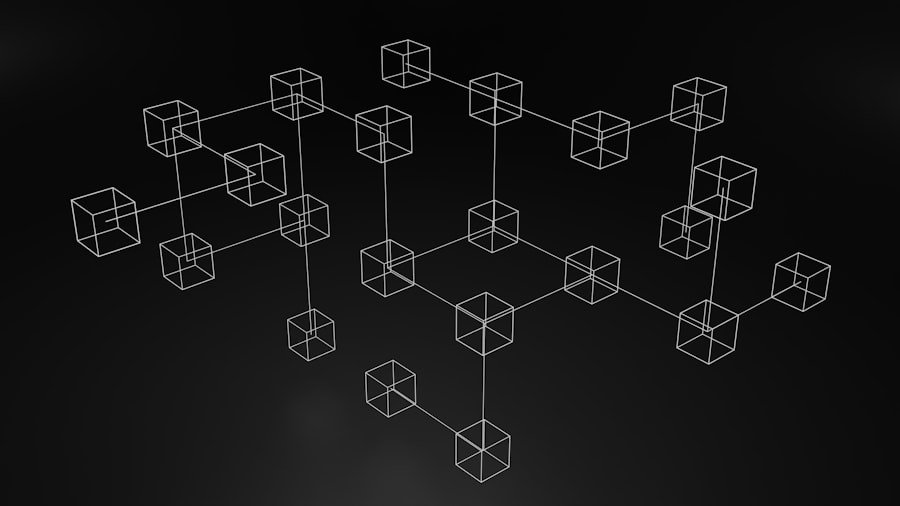
Alright, let’s talk about blockchain. At its heart, blockchain is a distributed ledger technology (DLT), meaning it’s a shared, immutable record-keeping system spread across many computers. Instead of one central authority managing all the data, everyone involved has a copy, and any new information (a “block”) is added to a chain after being verified by the network. Think of it like a community-maintained, super-secure digital notebook where nothing can ever be erased or altered once written. This fundamental design is what gives blockchain its unique strengths in security, transparency, and resilience.
So, why all the hype? It boils down to a few key benefits that centralized systems struggle to deliver.
Trust Without Intermediaries
One of the biggest game-changers is the ability to establish trust without needing a third party. Traditionally, if you wanted to make a secure transaction or share sensitive data, you’d rely on banks, lawyers, or government agencies to act as intermediaries. These entities verify identities, process transactions, and maintain records. With blockchain, the network itself performs these functions through cryptographic security and consensus mechanisms. This can significantly reduce costs, speed up processes, and remove single points of failure that make traditional systems vulnerable to attack or corruption.
Enhanced Security and Immutability
Because each “block” of information is cryptographically linked to the previous one, and copies are held across a vast network, it becomes incredibly difficult to tamper with data. Altering a single record would require altering all subsequent blocks and doing so on a majority of the computers in the network simultaneously – a near-impossible feat. This immutability ensures a high degree of data integrity and resistance to fraud.
Transparency and Auditability
While privacy can be maintained through various methods (like pseudonymity), the underlying transactions on most public blockchains are transparent. Anyone can see the history of transactions, which makes auditing much simpler and more robust. This doesn’t mean your personal details are public, but rather that the flow of assets or data is visible and verifiable.
Resilience and Availability
Distributed networks are inherently more resilient. If one computer or node goes offline, the network continues to function because many other nodes hold the same data. This contrasts sharply with centralized systems where a single server failure can bring down an entire service.
Blockchain technology, often described as a distributed ledger, has garnered significant attention for its potential to revolutionize various industries by enhancing transparency and security. For a deeper understanding of how blockchain can be integrated into private cloud solutions, you can explore the article titled “Private Clouds and Blockchain: A Perfect Match” available at this link. This article delves into the synergies between private cloud infrastructures and blockchain technology, highlighting their combined potential to improve data management and operational efficiency.
How Blockchain Actually Works Under the Hood
To really grasp blockchain, it’s helpful to understand a few core components.
Blocks and Chains
Imagine a digital ledger. Each “page” in this ledger is a “block.” A block contains a timestamp, a unique cryptographic hash of the previous block (like a digital fingerprint), and a batch of verified transactions or data. When a block is full, it’s closed and added to the “chain.” This linking process is what makes it a “blockchain.”
Cryptography: The Security Backbone
Cryptography is fundamental to blockchain’s security. It’s used for several key functions:
Hashing
Hashing takes any input data (like a block of transactions) and produces a fixed-size string of characters – its “hash.” This hash is unique to that specific data. Even a tiny change in the input will result in a completely different hash. This is how blocks are linked and how data integrity is verified.
Digital Signatures
When you make a transaction on a blockchain, you “sign” it digitally using a private key. This key is like a super-secret password. The corresponding public key is used by the network to verify that you, and only you, authorized that transaction. This ensures authenticity and non-repudiation (meaning you can’t later deny having made the transaction).
Consensus Mechanisms: Agreement Among Strangers
Since there’s no central authority, how does everyone agree on the correct state of the ledger? That’s where consensus mechanisms come in. They are algorithms that enable all participants in a distributed network to agree on the single, true version of the ledger.
Proof of Work (PoW)
This is perhaps the most well-known mechanism, famously used by Bitcoin. Participants (miners) compete to solve a complex computational puzzle. The first one to solve it gets to add the next block to the chain and is rewarded. The “work” makes it costly to try and cheat the system, as you’d need immense computing power to outpace the rest of the network. While secure, it’s energy-intensive.
Proof of Stake (PoS)
A newer and increasingly popular alternative, PoS involves participants “staking” their own cryptocurrency as collateral to validate transactions and create new blocks. The likelihood of being chosen to validate a block is proportional to the amount of stake held. This is generally more energy-efficient than PoW.
Other Consensus Mechanisms
Many other mechanisms exist, each with its own trade-offs, like Delegated Proof of Stake (DPoS), Proof of Authority (PoA), and Raft, often tailored for specific blockchain applications and network sizes.
Beyond Cryptocurrency: Real-World Applications
While Bitcoin and other cryptocurrencies put blockchain on the map, its potential stretches far beyond digital money.
Supply Chain Management
Imagine tracking a product from its raw materials to the consumer’s hands. Blockchain can create an immutable, transparent record of every step: sourcing, manufacturing, shipping, and delivery.
Ensuring Authenticity and Provenance
This helps verify the origin of goods, combat counterfeiting, and ensure ethical sourcing. Consumers could scan a QR code and see the entire journey of their coffee beans or designer bag.
Improving Traceability and Efficiency
In case of a recall or quality issue, identifying the exact batch and its journey becomes much faster and more accurate, reducing costs and risks.
Healthcare
Patient data management is a complex and sensitive area where blockchain offers solutions.
Secure Electronic Health Records (EHRs)
Patients could have more control over their own health data, granting access to doctors, specialists, or researchers on a permissioned basis, while maintaining privacy and security.
Streamlining Clinical Trials and Research
Blockchain can help maintain the integrity of clinical trial data, ensuring it hasn’t been tampered with, and facilitate secure sharing of anonymized research data across institutions.
Identity Management
Our digital identities are fragmented and often vulnerable. Blockchain could offer a more secure and user-centric approach.
Self-Sovereign Identity
Individuals could own and control their digital identities, deciding who gets access to what information, rather than relying on third-party services like social media platforms or government databases.
Digital Certificates and Credentials
Blockchain can be used to issue and verify digital certificates for education, professional qualifications, or permits, making them instantly verifiable and tamper-proof.
Real Estate and Land Registry
Property transactions are notoriously slow and complex, involving multiple intermediaries.
Streamlining Property Transfers
Blockchain can record property ownership and transfer, reducing fraud, speeding up transactions, and lowering administrative costs by removing layers of paperwork and intermediaries.
Transparent Land Records
Creating a public, immutable record of land ownership can increase transparency and reduce disputes, especially in regions with historically unstable land registries.
Voting Systems
Ensuring fair and secure elections is critical for democracy.
Tamper-Proof Voting Records
Blockchain could provide a secure, transparent, and auditable record of votes, making it difficult to manipulate election results and increasing public trust in the process.
Remote Voting with Enhanced Security
It could also facilitate secure remote voting, provided identity verification and privacy concerns are adequately addressed.
Challenges and Considerations

While blockchain offers exciting possibilities, it’s not a silver bullet and comes with its own set of challenges.
Scalability
Many public blockchains, especially those using Proof of Work, struggle with transaction throughput. Bitcoin processes about 7 transactions per second, compared to Visa’s thousands. Solutions like “layer 2” networks and sharding are being developed to address this, but it remains a significant hurdle for widespread adoption in high-volume scenarios.
Energy Consumption
Proof of Work blockchains, in particular, are extremely energy-intensive, drawing criticism for their environmental impact. This is a key reason why many newer blockchains and upgrades are moving towards Proof of Stake and similar, more efficient consensus mechanisms.
Regulatory Uncertainty
The decentralized and global nature of blockchain technology often clashes with existing national and international regulations. Governments worldwide are still trying to figure out how to regulate cryptocurrencies, ICOs, and DLT applications, creating legal ambiguity and hindering mainstream adoption in some sectors.
Interoperability
Currently, different blockchains often operate in silos, making it difficult for them to communicate or exchange data with each other. For blockchain to reach its full potential, seamless interoperability between different networks will be crucial, similar to how different websites can interact on the internet.
User Experience
For the average person, interacting with blockchain applications can still be complex. Managing private keys, understanding gas fees, and navigating decentralized applications (dApps) often requires a higher level of technical understanding than traditional web applications. Improving user experience is vital for broader adoption.
Data Privacy and Confidentiality
While transparency is a strength, not all applications require or desire full public transparency. For sensitive corporate or personal data, solutions like permissioned blockchains, zero-knowledge proofs, and other privacy-preserving technologies are being developed to balance transparency with confidentiality.
Blockchain technology serves as a revolutionary distributed ledger system that ensures transparency and security in various applications. For those interested in understanding how this technology intersects with cloud computing, an insightful article discusses the implications of cloud security in relation to blockchain. You can read more about it in this related article, which explores the challenges and solutions in securing cloud environments while leveraging the benefits of distributed ledger technology.
The Future of Distributed Ledger Technology
| Data/Metric | Value |
|---|---|
| Number of nodes in the network | 1000 |
| Transactions per second | 200 |
| Size of the blockchain | 1.5 TB |
| Energy consumption per transaction | 0.5 kWh |
Blockchain is still a relatively young technology, constantly evolving. We’re moving beyond the initial hype cycle and seeing more practical, enterprise-grade applications emerge. The focus is shifting from simply digitizing existing processes to fundamentally rethinking how trust, transparency, and data integrity can be engineered into our digital systems.
Expect to see continued advancements in scalability solutions, a growing emphasis on green blockchain technologies, and clearer regulatory frameworks as the technology matures. The foundational principles of decentralization and immutability are powerful, and as we collectively learn how to best harness them, blockchain promises to reshape various industries in profound and impactful ways, fostering a more secure, transparent, and efficient digital future. It’s not just a trend; it’s a new paradigm for how we manage information and value.